
Finding my Voice
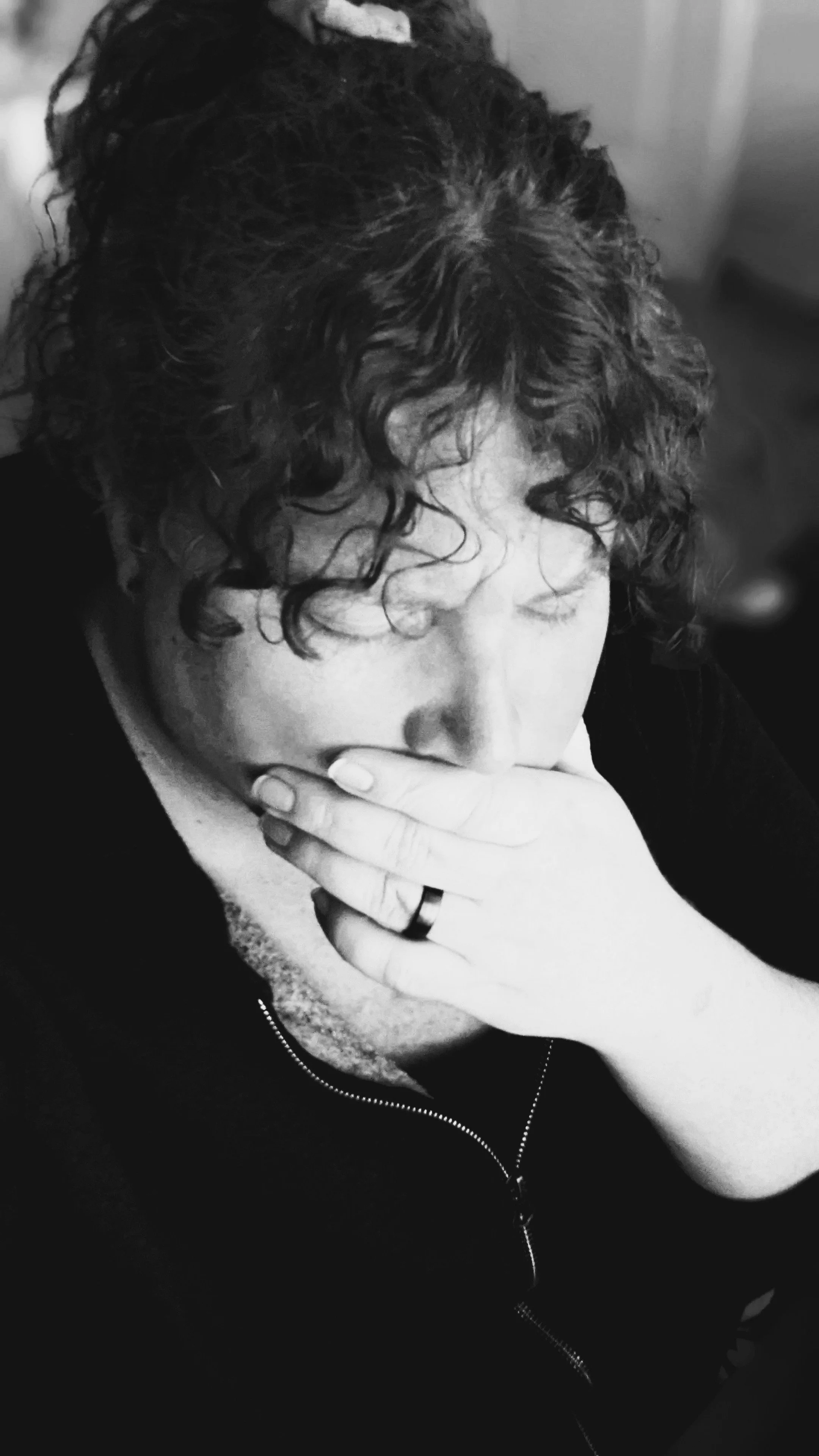
Ever since puberty, my voice has been a steady source of compliments in my life, even before I left New Zealand and my accent became a novelty here in America. I was told I had a voice for radio, unfortunately I was born a decade too late to have a career in radio broadcasting, though I did host my own radio show from a neighbor’s hobbyist studio in his shed for over a year. I also dabbled in podcasting for a short while, and found small success there, until my co-host and I broke up (pro-tip: only start a publicly facing project with your partner if your relationship is STABLE).
I sang in choirs, I was a Bass 2, capable of singing really low notes. I took a lot of pride in that, as part of my quest for masculinity. If I had a deep voice, then I clearly was a man and fit in with them, right?? We all know how that worked out…
Once I realized I was a trans woman, my relationship with my voice abruptly changed. It stopped being a point of pride and became a source of shame. Instead of something that made me fit in as a man, it became something that ‘excluded’ me from womanhood. I felt like opening my mouth was opening me up to potential hatred, that my voice would ruin any androgyny I had and would make people think “oh this is a man in a skirt”. It became an obsession for my OCD to grab onto and hold over my head, the compulsion being to speak less, and be less present.
It didn’t help that whenever I was engaging with Trans media or spaces, if the speaker looked feminine but sounded masculine, all of the comments would say things like “wow I had no idea until she spoke”, “oh girl, you’d absolutely pass with some vocal coaching”. Some even suggested Vocal Fold Surgery to strangers, as if it was something that they needed in order to be valid. I have an article in the works about Passing and the harm it does to everyone, but the long and short of my opinion is encouraging others to remove parts of their body as a means to being whole is something we need to move away from as a community. It’s unhealthy and sets everyone up for much worse dysphoria. It’s an extremely personal decision and shouldn’t be introduced as part of a checklist of “Things you must do to be a valid trans person”.
The compulsion to stay silent to not ‘out’ myself got worse, the more feminine my presentation became. The closer I got to being seen as a woman, the more I retreated inside myself further. I repeatedly pushed myself to speak and converse with people, but it became a constant internal battle to do so. I’d have moments where a stranger would talk to me, I’d reply, and if they had any expression on their face that could possibly be construed as negative, my dysphoria would take that as evidence that my voice had made them judge me harshly. I’ve talked before about defeating my inner transphobe and not hating myself on their behalf so this is work I have been doing internally for some time now - as I became more feminine in my presentation, this was less focused on my looks and more on my voice.
This was one of the reasons I stopped doing Tiktoks, I stopped recording narration for my articles, I was even hesitant to update the video on my own website - y’know, for my business about authenticity and pride in oneself? Yeahhhh, this has been a Catch-22 of shame for a while now.
The exception to all of this is when I am talking with friends in private or with my clients. With people who already know that I’m trans. People who I know that I’m safe around. Who I know won’t judge me for being who I am. If I’m in a social scenario like that, I’m less worried about their judgement and more worried about anyone who overhears us talking if we’re on a walk or in a public place. That’s when my dysphoria sneaks in and just pokes at my happiness with a scalpel and says “hey fuck you, remember to be ashamed”.
The problem with my dysphoria’s argument is that I’m not ashamed to be trans. I’m extremely proud to be a trans woman. I’ve thrown out all of the rules and prescriptions of gender and said “this is who I am”. I’ve made it my life’s mission to help others through the same battles I’m constantly fighting. It’s much easier to help others with their problems than it is to face my own, so my aim from here is to coach myself as if I were one of my clients, which will give you a little insight into my process that I use for my clients and myself through journaling.
Coach Hazel: So you’ve talked about your voice dysphoria and how it affects you, and also how you are proud to be a trans woman - tell me more about the dichotomy between those two feelings
Hazel: I’m really proud to be a trans woman and I try to demonstrate that pride by showing up and being visible. I know how important it is to see representation in my day-to-day life, so I try to present that to people as much as I can. It’s hard not to fall into the Passing trap as I get more readily recognized as a woman in public - it makes me more self conscious of my voice. Previously I thought it was obvious I was trans so I didn’t care as much. I never mentally prepared to pass because I never thought it would be attainable for me and that I should just learn to be okay with it. Now that people see me as a woman, I feel like opening my mouth is ‘proving them wrong’ - and I KNOW that’s internalized transphobia there.
It almost sounds like you think you’re tricking people, which sounds like a question of your validity as a woman… What’s the concern about if they did figure out you were trans or if they ‘found out’?
That’s where the current political climate is causing undue stress and mental self-harm, as if I could protect myself by undermining my own identity before others can do it for me. Bearing in mind that I still haven’t really experienced any direct transphobia in person, the worst I’ve gotten is older people staring at me in shops. I worked through that by telling myself that I just looked ‘interesting’ and they were trying to figure me out, it wasn’t necessarily hatred that they were trying to telepathically send my way. So the concern if they do figure out that I’m trans is the fear that how they treat me would change - again something I have no evidence of.
I will say, the worst comment I ever got about my voice was when I still worked in a call centre and I had come out as trans, changed my name and my work profile picture to show me looking more feminine (which shows on the internal phone system). I was transferring a client to another department and the guy who answered the phone said “whoa I didn’t expect that voice!”. It destroyed me for the afternoon. Combined with the amount of times I would get called sir by clients every single day, I couldn’t cope with working there for much longer after that.
Oh god, I just remembered another much worse comment: I was helping a client with their online banking login and she asked me what my name was in case we got disconnected, the exchange went like this:
“What’s your name again?”
“Hazel”
“Hazel…. Like the woman’s name?”
“Yes”
“Well why do you have that?”
“Because I’m a woman, I just have a deep voice.”
“Oh. I never would have picked up on that. (to her husband in the background) did you think that was a woman?” “No not at all” “No, I never would have guessed”.
Granted, that was early on in my transition while I had just started trying to feminize my voice. But as heinous as that is, I need to recognize that she didn’t turn around and spew hateful rhetoric at me, she just was entirely fucking thoughtless. But those are microaggressions I was met with at the beginning of my journey and I think I internalized a lot of that, like how dare I try to fight their reality when it’s so obvious that I’m ‘not a woman’ - again, internalized transphobia.
Those examples are objectively fucked up and you shouldn’t have had to deal with them. It’s clear they’ve weighed on you for some time. Can we recognize that those situations were more about their thoughtlessness than the validity of your identity?
Can you also recognize that things have changed since then? Your voice has gotten more feminine as you’ve practiced and worked on those muscles, you also have your presentation working FOR you when you see people in person, but it seems like you think you’re working against it instead.
Absolutely, my voice has gotten more feminine as I’ve practiced, I think it’s the sudden invasion of the concept of passing on my peace, so now it bugs me that I don’t sound like a cis woman. Which is borderline impossible for me considering I went through a puberty with testosterone.
Now we’re getting into the internalized transphobia, because there are cis women with beautiful deep voices - Nina Simone, Adele, P!nk, Cher, Kate Mulgrew, Sigourney Weaver, Jamie Lee Curtis, Joan Rivers, Eartha Kitt - these women are all celebrated for having deep voices. I could have listed 20 more examples. Women are diverse! Women aren’t a monolith! There’s diversity in womanhood and it’s beautiful! YOU are a part of that too.
That’s true and reminds me of a thought out of nowhere the other day and it hit me like a tonne of bricks: “Instead of trying to change your voice, USE IT”.
Exactly!! I love that! Represent the deep voiced feminine people that you idolize. Show people that just because you have a deep voice, it doesn’t make you any less feminine. They already thought you were a woman, why should your voice change that? Instead of no longer seeing you as a woman maybe they are thinking “Wow she has a deep and sexy voice. I need to reexamine some biases…”
That’s a little too hopeful…
Maybe not in so many words, but let’s go back to the idea of not doing transphobes’ work for them. Stop reading so much into a small surprised look, your voice may not be what they expected, but if they’re not commenting on it, then don’t assume what they are thinking. Otherwise you’ll be surrounded by silent telepathic transphobes and that’s not healthy. Another thing to consider is that you have an accent and American people fucking love your accent. What’s the most common question you get?
“Where are you from?”
Exactly, not “are you trans?” it’s curiosity, they want to know where your accent is from because THEY LIKE IT. We can talk about how othering that can feel another day but for now let’s look at it as the curiosity and not judgement that you hope to see in the world. It’s an offer of connection. Not rejection. Not hatred. Be nicer to yourself, you’ll see that people are being nicer to you than you’re allowing.
I’m working on it, it’s slow going but I’m getting there with self-love and compassion, even when I get stuck in mental traps like this.
We all are, and we will get there. Self acceptance, like transition, is a marathon - not a sprint. You’re doing a great job and I’m so proud of your progress.
Now I have no idea how to end a conversation with myself so… the end?
I hope you, the reader, have gotten something out of this. As per usual this is much longer than I anticipated but I got some value out of it myself and I’ll be approaching situations with a bit more confidence. I’ll never stop using my voice to help other people find their own.
-Hazel Bloom 💜
If you liked reading my coaching approach, you’ll enjoy it even more when I’m talking to you rather than myself!
Reach out for your free hour session and let’s see how we can get you feeling more confident in what you say and how it sounds. I wrote about this from my personal lens which is trans feminine, but I know that this is a battle in the other direction for trans masculine and non-binary people as well - one that I have helped my clients with and can help you with.
I specialize in helping people be kinder to themselves and I want that for you too!
